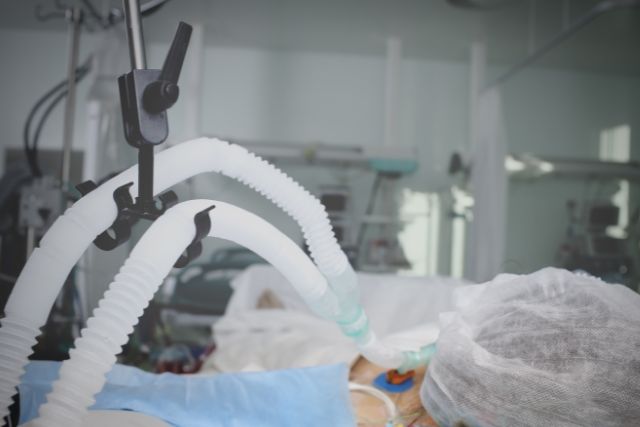



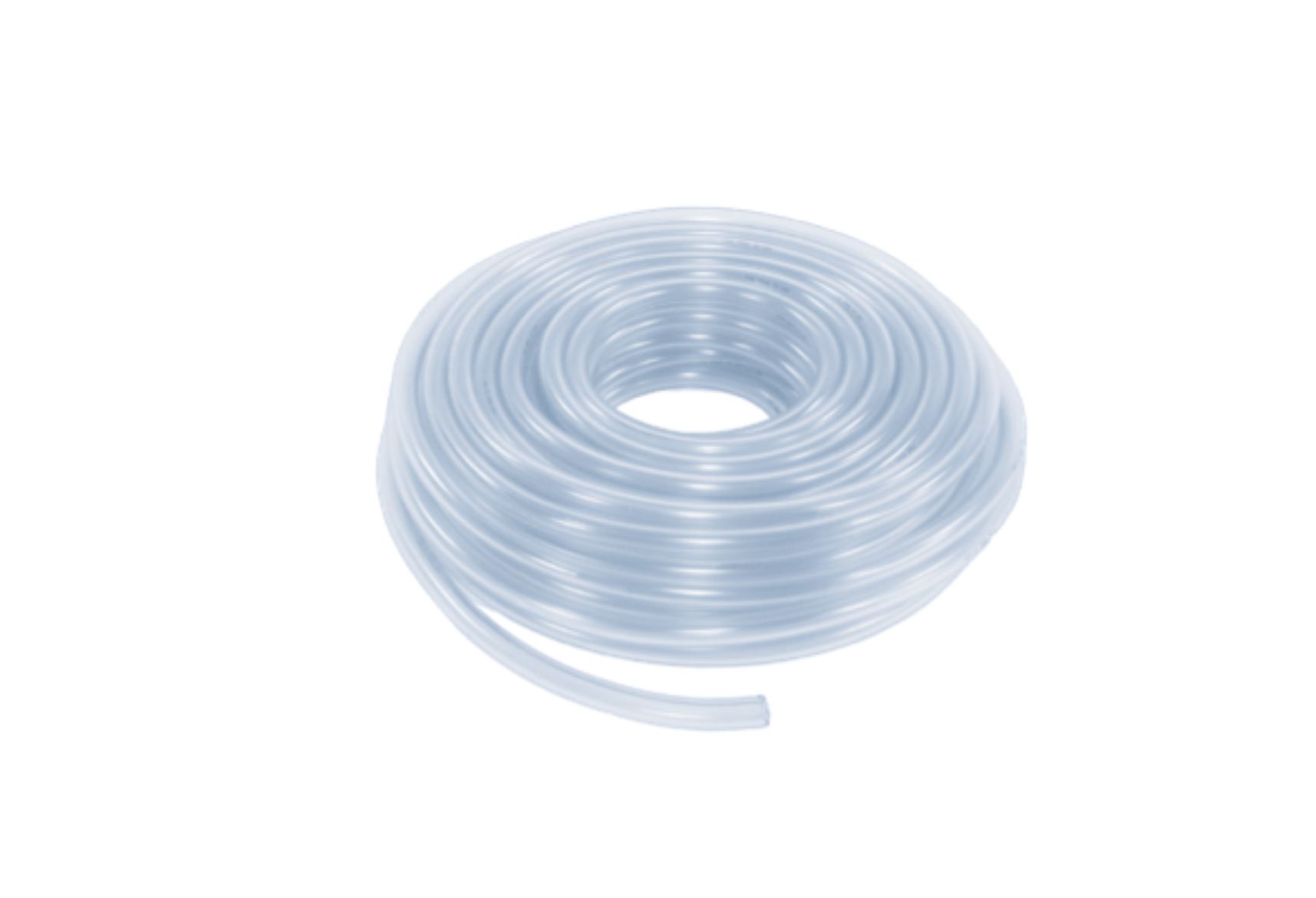
One could walk down a hospital ward and hardly notice the meter long segments of medical grade tubing used to drain IV fluids and deliver supplemental oxygen.
Medical grade tubing is rarely documented in patient discharge summaries, but is used to transport almost all fluids, drugs, and gases that migrate in and out of the patient’s body while in the hospital. Tubing is not meant to be showy. If a tube starts to cloud or bend, then that tube probably was causing a problem.
What Does “Medical Grade” Actually Mean?
Industrial PVC and medical PVC may have the same base polymers, but there the similarities end. Specific resins, plasticizers, stabilizers and colored additives are assessed on an individual basis to ensure biocompatibility rather than just mechanical performance.
Compounds go through a series of tests before they’re labeled as such. Some of the tests include:
1. Cytotoxicity to determine if the compound or material will not damage living cells.
2. Sensitivity and irritation tests to determine if there may be an allergic or inflammatory response.
3. Systemic toxicity tests for devices that will have prolonged contact with patients.
4. Hem compatibility for devices that come in contact with blood.
Generally, these tests get done against the ISO 10993 series tests around the world and the USP Class VI in the U.S. A company marketing a tube as “medical grade” but not having complied with these frameworks likely means a company is asking hospitals to take their word for it.
Why PVC?
In medical device marketing, silicone gets more press, but for real world use, PVC is the winner by a landslide for hospitals worldwide.
1. PVC can be molded in various hardnesses from rigid to highly flexible with the help of plasticizers.
2. PVC bonds cleanly to connectors, ports, and drip chambers.
3. PVC is naturally transparent without the help of other clarifying agents.
4. PVC is less expensive than silicone and other comparable alternatives.
For single-use devices like IV sets, this combination of tunability, clarity, and cost is hard to match.
The DEHP Question
DEHP (di-2-ethylhexyl phthalate) was the backbone of the plasticization of PVC tubing for several decades. DEHP has proven to be an excellent plasticizer, but by the early 2000s there were safety concerns about the migration of DEHP from tubing into blood and infusion fluids, particularly with long-term infusions.
The subsequent migration toward DINCH and TOTM was inherently a better choice, taking into account similar flexibility and a much better toxicological profile. Many hospitals and tenders have begun to demand neonatal, pediatric and long-term infusion tubing contain no DEHP, and DEHP plasticizer tubing remains widely utilized for shorter and adult-focused applications, where cost is of greater concern. A good manufacturer provides optionality.
Transparency isn’t superficial
In the case of intravenous tubing, transparency is of great importance. While clear tubing certainly helps with aesthetics, clear tubing is invaluable to nurses for many reasons, including spotting air bubbles, monitoring drip rates, identifying discolorations in drug solutions, or detecting blood backflow. From a clinical standpoint, any DEHP tubing which has haze, yellowing, or is translucent should be considered an immediate obstacle.
Kink Resistance and Consistent Bore
Constant bore is vital for a tubing system’s ability to deliver its service reliably along its entire length. Tubing that is not consistently thickened along its walls will deliver fluid irregularly and can even be designed to cut off flow to a patient without any warning being given on some infusion pumps.
Kink resistance is critical in the extrusion of tubes used in healthcare. Due to safety and life support concerns, variances that would be negligible in a garden hose (e.g. a hose for watering plants) would not be acceptable in a hose that transports cardioplegia solution or chemotherapy.
Sterilization: In comparison to other tubing, medical PVC tubing is generally not autoclaved, since high-pressure steam can cause polymer distortion, and eventually, the migration of plasticizers.
Manufacturers validate their formulations for the customer’s intended method of sterilization, especially for gamma irradiation, which can affect flexibility and color after a prolonged period of time.
Where the Tube Actually Goes
It can be surprising to learn how many different types of devices use similar tubing which is cut, printed, or assembled in a different way:
1. IV administration sets and extension lines – The most visible example which also has the largest volume.
2. Blood and blood component transfusion sets – Here, hemocompatibility is extremely important.
3. Urine drainage bags and catheter connecting tubes
4. Enteral and nasogastric feeding tubes
5. Suction and surgical drainage tubing
6. Dialysis and extracorporeal perfusion circuits
7. Oxygen delivery and anaesthesia breathing circuits
Each of these has its own balance of flexibility, clarity, and chemical resistance, and therefore requires a type of tubing that is specifically designed for that application.
This means that different manufacturers can sell a different variety tubing for each of the different applications.
Manufacturing Precision Behind the Scenes
To produce medical tubing, precision extrusion is used. This process involves a molten PVC compound which is pushed through a die. The die is calibrated and the compound is cooled while it is being extruded. During this process, the outer diameter is being measured in real time by an in-line laser micrometer. The wall thickness and ovality are checked at various intervals during the production process.
A quality operation will maintain batch records as traceability so that if a quality issue is raised months after the tubing was produced, the conditions during the production of the tubing can be reviewed to determine if the production process complied with all applicable standards.
Where Things Go Wrong: Analysis of Failure Modes
Hospitals and OEMs have similar issues that they attribute to tube failure.
They cite the following:
1. Defective tubes due to plasticizer migration, causing stiffness or cracks from extensive storage
2. Inconsistent bore diameters leading to irregular flow
3. Tube kinking at connector points due to litteral patient movement
4. Leaky connector junctions due to poor design
5. Color/transparency variations in different batches that render quality control inspection difficult.
None of these failure modes require advanced engineering. They are generally due to issues with quality control. It is, therefore, important to examine the company and not just the polymer used.
What to Ask Potential Suppliers Before Buying
When assessing potential suppliers, Hospitals, distributors, and device OEMs usually ask a set of common questions:
1. Are the compounding materials free of DEHP? Is this documented?
2. What ISO 10993 or USP Class VI tests have been performed?
3. What are the ID/OD tolerances, and are they consistent in different batches?
4. Which methods of sterilization are the tubes validated for?
5. Can the tubes be made in custom lengths, durometers, and colors for OEM use?
6. Does the supplier provide the service under an ISO 13485 certified quality system?
Safety of the patient and ease of device fabrication are the most important concerns. The answers should not be considered formalities.
Where the Industry Is Heading
Regulatory pressure, particularly in the EU, continues to push tubing formulations further away from legacy plasticizers and toward bio-based or citrate alternatives.
At the same time, thermoplastic elastomers are competing for share in select applications where extreme flexibility or long-term implantation is required.
PVC is unlikely to disappear from hospital supply chains any time soon — its cost, weldability, and clarity are hard to replace at scale — but the formulations running through that tubing a decade from now will almost certainly look different from what is standard today.
Final Thoughts
Medical grade PVC tubing will probably never be the part of a device that anyone chooses to talk about at length. It doesn’t carry the clinical drama of a stent or the visibility of a monitor. But its consistency, clarity, and chemical stability quietly decide whether a drug reaches a patient at the right rate, whether a nurse spots a problem in time, and whether a device performs the same way on batch one thousand as it did on batch one.
That is exactly why it deserves more careful sourcing than it usually receives.